i'm tired..
it's been a crazy couple of weeks here and i need to have a bit of a lie-down.
i'm gonna take a bit of a rest - see ya next week or something.
image: me. from seb's flickr spot.
it's been a crazy couple of weeks here and i need to have a bit of a lie-down.
i'm gonna take a bit of a rest - see ya next week or something.
image: me. from seb's flickr spot.
David Kemmery is an amazing resident of Wollongong - the Director for Short Sited Film Festival for an amazingly long time, fantastic film maker, hard-working member of the Relativity team, great photographer, good friend and the lovely partner of a friend of mine.
He also asked me to participate in his ongoing project, Not Now I'm Talking, which is now part of an exhibition [clap and we'll tell you everything] on at Project at the moment.
The Not Now, I'm Talking project is centered around the idea of places, spaces and how they are significant to people. It features snapshots and text by 15 selected artists about their "significant places". The artists are from a radiating distance, relative to David's place: Wollongong, to the Illawarra, Sydney, Melbourne and then international and the significant "places" that are featured are physical, conceptual, cryptic, direct and diverse. And the only link between the contributors is that they know the curator, David Kemmery, which in turn says some interesting things about connections between people and places, memory and experience, and begs the question 'what is distance?'.
Go and check it out if you're in the area - sounds like a cracking show:
clap and we’ll tell you everything
Project Contemporary Artspace
255 Keira Street, Wollongong
Wednesday 27 August – Sunday 7 September 2008
Opening night: Friday 29 August 2008, 6:30pm
*my really daggy title abbreviation: [i]NNIT!

i make a pretty hot batch of scones, even if i do say so myself. but, in the spirit of love creative's non-bake off, this weekend i decided to not bake some scones. perfect with a cup of tea. perfect for a rainy saturday afternoon.
to keep your balance you must keep on moving.
-Albert Einstein [in a letter to his son]
thanks swiss miss
i've been starting to ramp up my research into public toilets lately (have a project in one at the moment). then this turned up on wooster yesterday (thanks to miss emma for the heads up)
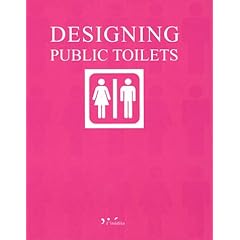
and then tonight in readings bookstore i found this book i need: designing public toilets.
everything always comes together when it comes together.
last week i was roped into appearing on part of a chit-chat panel, as part of SIAL's drink + think series. the discussion was on architecture, public art + sound and where those three disciplines intersect, what the possibilities are for the future of them and what some of the problems are surrounding them. derek thompson, from arup's sound lab was there, as was barnaby bennett, who apparently also gave a presentation on "the re-emergence of brown" (that's my kind of seminar title), as well as geoff hogg and anthony mcinneny.
and as much as i enjoyed being a part of it, my all-star panel on this topic would include dan hill, lawrence harvey, anton hassell (his tubular bells, mau bells laneway commission is amazing), dylan martorell, michael fowler, marco fusinato and maybe david byrne/ dan liebskind talking about playing buildings:)
one thread of the discussion that i particularly enjoyed hearing about, with regards to architecture, urbanity, sound and public art is the idea of acoustic privacy. i'm reading some very interesting literature at the moment about the history of privacy amongst the bourgeoisie, but it's the new culture of the open-plan office, and the re-emergence of a headphone culture that piques my interest. where the 'cone of silence' has currency as a phrase that is not just a quote from get smart, but an understood space of mental peace and private resonance.
i'd also be interested in looking at the effect of acoustic privacy in terms of emotional response and sleep patterns. when i travelled around europe, in youth hostels all over the place, i regularly had the best sleep, 'cos i carried several pairs of earplugs with me. once i shut out the high pitches of any noise in the immediate vicinity and the midtones of outside traffic, i was in a world of my own - in the sonic version of darkness - and i slept like a log.
[i know it's not solving the problem, but i wonder what a difference ear plugs would make on the lives of those who live on the streets/in shelters.]
and, i guess, given those ubiquitous stats about populations inevitably becoming primarily city-bound, how will we as a species adapt to the noise of urban space? will we physically evolve accordingly, by having a low range of perception? or will we continue to develop devices/tools to cope? and our childrens children, born into higher and higher densities, how will their private space sound?
*image by aaron kraten, from his flickr spot
i've previously posted about humour in architecture on this blog - now it's all about humour in a help section (like a hero in a half-shell).
i'm trying to work out if you can have a multi-user del.icio.us account - i wanna set one up for our public art course [although i think it'll have to be a full wiki instead, bugger]. while checking out the FAQs, i noticed a nice bit of humour, right at the bottom of the page, after you've had all the frustration of not finding what you're looking for:
cute, huh.
‘Striped surfaces are rarely found in nature. When man encounters them, he... sometimes fears them (... in the Middle Ages), sometimes admires them (...our contemporary attitude).
‘Everywhere red and white stripes abound, warning of danger, recommending caution, forbidding this of that access. Caution, workers! Slow, detour, stop, obey: in the street and on the road, thse ar the kinds of direct and indirect messages all red and white striped signs send us. The combination of these two colours, that of interdiction and that of tolerance brings out fully here the stripes’ ambivalence: it is guide and obstacle at once, filter and gate.
In certain cases, it is possible to pass, respecting various constraints; in others, it is imperative to stop. That is so at lowered grade crossings, border posts, or when coming upon a police barricade. All are indicated by a profusion of red and white stripes, which not only can be seen from far off- probably, today, what can be seen from the very farthest off – but also provoke a certain agitation, indeed even a real fear. Behind this kind of stripe, danger always lurks. And, along with danger, authority – danger of another sort – embodies by the police, the state patrol, or the customes office. A stripe often leads to a uniform, and the uniform to a penalty.
Thus most of these red and white stripes used on traffice signs function as screens. They are some sort of shorthand image for a doorway or fence that can only be crossed under certain conditions. A imple red adn white striped horizontal line placed across the road (which sometimes embodies a grade crossing) has the same effect as a huge gate, which could be striped with the same colours and located in the same place. Here we can discern an essential feature of how the stripe functions: metonymically.
The stripe is a structure that infinitely repeats. Whether it appears on a tiny surface or one of great dimensions, its properties remain the same. The part is as good as the whole, the structure takes precendence over the form. From which we get the extraordinary plasticity of the uses for the stripe and, over the course of the centureis, its continual employment as mark, sign, insignia, emblem, attribute, whatever the medium, technique, or context.’
from the devil's cloth: michel pastoureau, ©1991
university of columbia press, new york
2001 translation by jody gladding
iain tait, coolest geek ever, has already written about this thing here and here, but i just have to add my two bits' worth to it.
i am a geek - i love books, art, music, talking shit and online thingys. and i love anything that validates my love of those things. i've been twittering for a couple of years now and still love it as much now as i did then (although the hiccup to DM text services is getting me down a bit, that's for sure).
but then, on the horizon, comes this fabulous new thingy to brighten up my mood: blip.fm. twitter for music heads. where twitter answers the question 'what are you doing?' in 140 characters or less, blip.fm asks 'what are you listening to?'. you can search, find and play it. no downloading, just streaming. and you get to listen to what your friends are listening to! which, in the case of some of my friends means a quick flick forward, but for the most part, it's rockin! in fact, it's like the online version of going around to a friend's place and them playing you a whole bunch of new 7" rekkids. oh, yah!
here's my current playlist, full of recent rediscoveries (and a whole lot of slacker nostalgia)
http://blip.fm/profile/sheseesred/playlist
this morning at 8am i woke up to a text message:
"lauren, are you an American Apparel M?"
with my fuzzy brain, i was able to realise that my dear friend seb, in germany, was asking me what size clothing i wore, if i had bought it from American Apparel. I've not ever bought anything from American Apparel, so i don't know. I know that i'm a size 10. Ish. Whether that's a UK or US, I've no idea.
which later got me thinking about the standard unit of measurement in fashion. I'm currently measuring up and making patterns for spaces and, as such, very grateful for the invention of the inch (and then of the centimetre) as a standard unit of measurement, and the design of a tape measure.
I know, small things, amuse small minds.
I'm not exactly sure when these came to pass, but in a recent-ish conversation, ex-colleagues of mine and I were surmising that it was probably as the result of the textile trade. not the craft of making clothes, but the concept of trading, customising, selling and economy, using garments/cloth as the primary currency. Presumably, this required people on both sides of the trading table, to understand how long a piece of cloth was going to be. How do you measure that? Well, you have to devise a unit and a tool to measure with.
OK, so as the textile trade booms, , the concept of the prefabricated garment develops, to which you have to develop a sizing system. This seems to work well for a large amount of time. We still haven't worked out exactly what the difference is between a UK 4 and a US 8, but then again, neither have the supermodels, or the haute couture designers, so it ain't all bad.
but nowadays, clothes aren't 'from' the UK or the US. In fact, they're mostly made in china. designed elsewhere, but the industry sizing standard is not strict, rarely adhered to and a little, well, loose. it seems that countries, or whomever runs the fashion industry nowdays, don't care so much. unlike other areas of industry where a unit, is a unit, is a unit. for instance, a megabyte of RAM is 1024KB worldwide. you don't get a 1000KB in india, 958KB in italy on a good day and 1055KB in new zealand because they value a little extra room. this would undermine the concept of having a global standard. and well, big global brands like Dell and Apple couldn't control their market if the unit was a little fuzzy. but no, not for the fashion industry..
although....
[Enter globalisation. ]
what better way to 'take over the world' [insert doom and gloom organ dirge], than to create ones own unit of measurement. like American Apparel M (Medium) is now a standard unit of measurement. It doesn't fit into UK, US, EU fashion standards but transcends (or ignores) it. Other 'sizes' I've heard of recently: the GAP 10, the H&M Small and the Converse 5. This supposes that one has worn clothes from all of the above brands. which of course we all have, right?. and belies a level of arrogance and or smarts that i can't quite work out if i despise or admire.
what i find most scary about this whole messy sizing business is that if there is no level playing field within the fashion industry, why are we (mostly women) still playing against the numbers. despite years of feminist mutterings, there is still an aspiration to an 8, 12 or, even worse, small. when small becomes a unit of measurement that we pit ourselves against, things are going to get ugly. more dangerously for some than others.
and, to add to the sickness of us having to 'measure up' to an ever-shifting standard of measurement, is that there doesn't seem to be the impetus to change that. we may boo and hiss at the big designer labels, looking for them to change their sizing, we may whinge at the mega street labels, bitching at how shit we feel that we're wearing large, when we used to be a 10, but the reality is, that the unit of measurement comes from both sides of the trading table. which means that as consumers of cloth, there has to be the will to know exactly what we're buying. and perhaps, sadly. we don't really want that to change yet.