25.9.13

listening to london on a monday


last monday i had worked inside all day and found myself a little, well, lets just say i didn't feel like watching tv.

i wanted to soak up the goodness that london has to offer, infuse my brain with something worthwhile. i was also feeling a bit lonely that night and wanted to do something with a group, but nothing too big or "group"-y.

i remembered that my friend (and great storyteller) amaara raheem was participating in this year's one-on-one festival at battersea arts centre, london stories, so i forked out the £12 online at the last minute and scooted south west.

i could go on about how amazing battersea arts centre is as a building and a site for performance, but i'll leave that for another post.

this one is about listening to stories.

unlike perth's one-on-one performance festival, proximity, this is just about listening to stories. similarly, there's an individual route that you take through the building. sometimes that is shared with another person, sometimes just on your own.

my initial balk at the idea of having to 'share' my intimate experience passed very quickly, as the intimacy of listening with another person became actually quite delicious. and, considering the kinds of stories we heard, also a bit of relief.

toby, cancer and other bedtime stories
sitting cosy on the back steps, the first story i heard was from toby, who, in his fairly young life, has managed to beat lymphoma twice. although intense, thankfully this wasn't a sob story, but a heart-warming and honest appraisal of negativity, taking responsibility for health and the gob-smacking brilliance of the human body.

amaara, her red shoe and other fairytales
in a sweet laundry setting, lit by candles (as were most of the rooms), amaara told an hilarious story about her relationship between london and her daily commute to work, through an upside-down extension of the hans christian anderson story of the little red shoes. it was personal, engaging, humourous, without being facile or jokey mc joketown.

jade, her escape from uganda and her "5-star" stay in yarl's wood*
this was a harrowing, but all-too-common story of jade's life and escape from uganda, corruption, the military and the lord's rebel army. it was a story of her husband, children, twin sister and nieces being killed. it was a story of dehydration, hunger, deprivation and  hiding. it was a story of kindness and eventual passage to london. she spoke of her time in a detention centre as a '5-star hotel' with 3 meals a day, doctor's nurses and places to chat with others and children to play.
as a couple of naive white gyals sitting there, the disparity was as loud as a sub-woofer, but there was zero resentment, only gratitude at her story being heard.

it was the best use of storytelling and the arts in politics i've experienced to date.


other stories of self-indulgence
i'm sorry, this is going to sound harsh, but most of the other stories i heard - although i enjoyed them - felt, in comparison, a bit, well, whingey.

love stories in london, stories of heartbreak and loss in london, homelessness (although that was actually a bit less-so) - they all felt a little self-indulgent. pretty much the same kind of story we always hear. and sometimes more like therapy and catharsis, than a story.

i spend a lot of time listening to people's personal stories each week and they find a lot of solace from sharing them. but they're not art, or theatre, or even really very interesting to that person and me. and usually i'm only interested because i have similar problems and am looking for identification. it is more intimate than being an audience, but still relatively mundane.

which is why i found the three i mentioned much more valuable.

having said that, the act of listening to others was comforting.

and the combination of being with another person, knowing that i was part of a whole group, but not 'in' that group and well-supported in my journeys (logistic, emotional and intellectual) by the staff at BAC - a really worthwhile sense of togetherness and community.

some of the other trimmings of the evening? perhaps a little unneccessary, but overall, an excellent way to enrich your night.


*i'm sure she said yarl's wood - especially because it has had a fair bit of press lately, although i may have the UKBA immigration centre wrong.

29.8.13

word. sound. power

A few weeks ago, on a gloriously sunny day in London, my fellow smart-lady, Zana, and I got our wordiness on along the southern bank of the Thames.

We sandwiched the BFI's screening of Right On! between visits to the Tate Level 2 Project Space for their brilliant exhibition Word. Sound. Power.

Right On!


This is the Herbert Danska film is of the (original) Last Poets, late-60s poets - performers, griots-if-you-will, from New York. And crucial influences on the development of rap and hip-hop.

It was an amazing film, consisting of an 80 minute spit and flow of about 8 pieces by the trio, backed by drums, costume changes and amazing black male power on a hot summer afternoon/evening. And it was warm in London, too.

The series of spoken word performances -  poems, matras, incantations were performed, spat and hand-delivered from the rooftop of a hot Harlem block on a sunny afternoon in 1970, to a dark soporiphic theatre.

As the sun tripped from east to west across the sky, the trio: Felipe Luciano, Gylan Kain and David Nelson, interchanged between lead performer. The different forms for each poets flow, their particular voice and rhythm were mesmerising andsupported by a powerful drums, casual fly movement and the uhs, ahas and energy of the other two artists.

Works like Poetry is Black, Jazz and James Brown were not so much choreographed, but embodied, as crucial element of the relationship between words and the body, between the themes of race, sexuality, white power and poverty, as they came spilling out.


Taksh, an African-American scholar, originally born in South London hosted the afternoon, including giving a decade-by timeline of Black Power cultural expression interspersed with his own poems about each of those times.  To be honest, I would have loved to see that part as a separate event, as I felt that is overshadowed the power of the works in the film, and also simplified the black experience to solely musical genres. But I acknowledge my rather ignorant position on the matter.

Zana and I had to leave for part 2 of the exhibition, so didn't see the discussion the end. I was hoping for some powerful discussion on the place of words.

I would have loved answers to questions such as Is Poetry is Black in the 21st Century (as I believe it still is, certainly in London)?
What place do works like Right On! have on the British black (male) experience?
How can we acknowledge the beautiful, but fairly limited value of Woman in such films and how can words and power be part of changing that for the future?


Word. Sound. Power


Whenever I think about this show, a 90s throwback of lyrics that might not even be real lyrics from the Sub Swara ft Dead Prez song Speak My Language (Machinedrum Mix) comes flooding into my mind:

"This is word sound power, this is rebel soul."

And it is rebel soul, this phenomenal exhibition, curated by two amazing women, in conjunction with the fantastic KHOJ artists collective from india. It features 6 artists making work about sound, the voice, the word and power (not that you needed my help in making that leap).


Lawrence Abu Hamdan has two works in the show. His work with Janna Ullrich, Conflicted Phenomes (pictured, pinched from the Tate website) is a visual research and data map of Somali spoken language tests to ascertain cultural original, to satisfy criteria for refugee status. As a data excercise on its own, it's quite beautiful - with its graphic keys to each person's relationships and language connections

As a reflection of official policy on the business of people's asylum and freedom implemented by outsourced agents, without checks or balances, it's creepy.

I was originally suprised to see that Australia uses this for their immigration processes. And then I really remembered Australia's immigration processes and was unsurprised, dammit.


His other work, The Whole Truth, shines a light on the relationship between the place in which the voice and power intersect: the Lie Detector; When the voice is used to support incarceration, the place in which a person's (political) voice is removed - according to Foucault.


Caroline Bergvall's word drawing and spoken piece was quiet, but striking. A poem, with all of the letter o-s taken out, and placed on the opposite wall, creating a spacial relationship to the word and the sentiment, supported by the surround sound work. It was simple, but I felt things.


Zana and I went back twice to see Mithu Sen perform I am a Poet and both times we missed her - she cancelled one performance, as it was too much to do too many in the day, and then she must have finished the reading early, because it was already over by the time we arrived after the movie. We were both super disappointed because we wanted to hear her.

But her work in the gallery is interesting and engaging nonetheless. I loved her underlying premise of nonsense as resistence. The language is crucially human and that defying the technology of language, there is a core resistance of all that is human.

In light of the work Boni and I have been doing with Relay - a chopping up of political speech, which is not necessarily straight-up nonsense, but an interesting link nonetheless. I enjoyed giving my nonsensical version of the poem, too.


Nikolaj Bendix Skyum and his videos Arise and Keep Evans Safe Tonight was seemingly a major focus for the exhibition. Although, to be honest, I didn't feel like it was as crucial to the themes of the show as some of the other works, or the exhibition as a whole. Just my opinion.

The interviews in KEST were quite lovely, giving young men a voice and able speak out. I especially enjoyed the KEST boys speaking of the common diasporic experience of going back to the land of one's parents and suddenly feeling the ease of a culture that is deep within.


Added to the work in the gallery, the essays in the catalogue were amazing. Both women speak about the relationship between sound, power, culture in different ways but equally engaging. They provided second and third angles on the underlying themes of the show, providing a solid triumvirate, reflecting the title itself.

Loren Handi Momodu from Tate Modern writes about the experience of sound, referencing Brandon La Belle and speaking about it as a means of creating an 'aesthetic space' and the apparatus of the vocal, quoting Louis Chude-Sokei.

Asmita Rangari - Andi from Khoj speaks about the privilege of using the voice (and other sound means) to speak out - the ability and agency to articulate and the place of silence in this privilege.

The place of words, sound and power in contemporary aesthetics, culture and politics are particularly present at this time and the exhibition is a must-see for anyone remotely interested in any of these things, as well as the ways in which political ideas can be presented aesthetically not didactically.

The exhibition is on until November 2013.

22.8.13

speaking up: the personal, the professional and principles


I start a lot of my posts with caveats lately - here's another one:

caveat: I'm not an amazing example of professional because sometimes I let my principles get in the way of me making money.


I've been less chatty on here than I used to.
I've been saving a lot of my diatribes for twitter.
It seems to be the place where i'm getting the bulk of my intellectual discussion lately, although it's not always ideal. 140ch, even carried over a few tweets can get really confusing when you're trying to debate someone or actually discuss things. It's some kind of glitchy forum *.
However, it's still the medium of choice for me for some serious brain food.


Somehow I came to follow David McQueen. He's an amazing man - involved in youth education, business mentoring and empowering people to really do what they do and be amazing. From what I can tell from his twitter output, he's involved in a range of really interesting, worthwhile and actually helpful ventures, mostly talking to people and encrouaging them. And his #SundayReads are always impressive and provocative.

He's also a tall, black man with 2 daughters, a gorgeous wife he's been married to for 18 years and incredibly invested in seeing change around education, agency, race and principled people. I know this because, with measure, he didn't deny his personal effect within his professional adventures.

That's probably how he ended up in my timeline (I follow some pretty rad people, you know).

For example, he didn't pretend that it didn't effect him when Travyon Martin's killer was acquitted, he didn't pretend that the media blow-out wasn't influential during the Woolwich murder of a (white) British soldier and the ensuing EDL can-can, and he posted an opinion which I respected about Mos Def's intense video undergoing the Guantanamo Bay force-feeding regime (which I personally related to and valued the discussion, having done an artwork about the audio torture on those same detainees).

This was the scope of a professional life of a man living in London, with the connected joy and connected prejudice.

Anyway, about a month ago, David announced that he was going to set up a separate twitter account for his more-personal musings, rantings, humour and introspections. And keep his David McQueen account for professional discussion.


And it's probably the right decision.

Because his clients don't necessarily want to acknowledge that issues of race, poverty, education, homophobia, religious extremism, media sluttery (my words, not his) influence the business of running businesses or educating young people.


But I continue to rag on him for it.
(I hope it comes across like a niece ragging on her uncle.)


Because -  to my mind -  culture and privilege and media and bigotry do effect the world of business owners. And I like hearing that a successful, powerful man invested in education, with great results, is affected by these things, but continues to educate children, empower people with businesses and talk to people daily about how to overcome obstacles in achieving what they desire: regardless, because, despite and in spite of.

They're real things that happen.

And for me, it enacts the business of doing what you need to do in order to contribute to the world, without pretending that you're not in that world.


So what is the political balance between personal and professional?


I retch at the industrialist idea of a person just being a unit of labour, a denial of the social or personal effects on their work and vice versa.

I do believe they're interwoven - with the best and worst aspects of those effects (see under Roman Polanski, Catholic Priests, etc)


I have to acknowledge that I have a privileged position in this.  I was raised by women who kept reminding me that the personal is political. I'm also white, middle-class and really don't struggle (except financially)

When I go on about something, I'm not expected to be speaking for all of 'my people' and if it affects my professional capacity, it's unlikely I would have wanted to work with those people anyway.
And I'm not married with children, so my opinions about the world don't effect my husband's or my children's lives. I don't have corporate responsibility or institutional ties yet.

And even if I did, as an artist, it's also kind of expected that I might be outspoken and have left-leaning principles (or as I like to call them, manners).


It reminded me about the criticisms of Barack Obama during the Zimmerman acquittal (and other recent changes to American life that were influenced by race). He was criticised for denying his race. For acting as though he was separate from it when calling for calm or whatever. For separating his personal priciples from that of the Head of State. The suggestion was that to deny that the political was also personal, was, to some people, also a crime against other persons.


But is this unfair pressure on someone to be 100% accountable all the time, whilst I am as C-grade as it comes on the same scale?

Does this not just set up a sliding scale (and/or slippery slope) of behaviour in a public life heirarchy - a disconnection between what you do and how you feel?

Or do I just need to accept that this is the nature of contemporary times and multiple egos, where we have the need and skill to distance ourselves from others in a variety of ways and that there's nothing actually wrong with that.


*NTS: make a performance that reflects this.

**  I love p-square and the MJ reprise, but I have big problems about the same-ol-same-ol way of expressing ladies in this clip.

5.8.13

utopias


I have never considered myself to be interested in utopias - previously having lumped it in with the business of fluorescent triangle painters and mystical scando- aesthetics.

But I recently did some writing about my utopia, as part of an application process for a residency, in relation to race and white privilege.

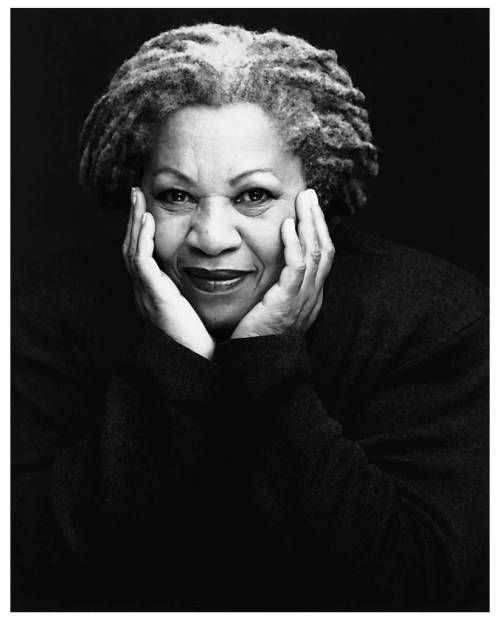
And then today I found this quote from Toni Morrison on blunthought's tumblr (from whom I've also nicked the pic).


“All paradises, all utopias are designed by who is not there, by the people who are not allowed in."

Which made me wonder if utopic art, fantasy, paradise, etc - is it not the antithesis of (and therefore might as well be) social realism ? If it is, by definition, designed by those who aren't there - then doesn't it tell us just about who is here (and not there) and not anything more than that?

Like an Arnolfini Marriage-esque inverted mirror.

I need more thoughts on this, but just for today it poses some new perspectives on utopia and its aesthetics.

30.7.13

report abuse. or not.

This is a half thought-out blog about something that came across my desk today, which is on the back of a discussion I had yesterday, which is something I heard about the day before but didn't surprise me because I have heard it a thousand times before.

The Rape Tweet.

God help us if in 50 years time, we talk about these times as those of The Rape Tweet.

Fuck. me. How to minimise the mess of this situation into a crass phrase and an easy sound bite.

see also The Report Abuse button.


I could be and probably am wrong about my opinion about this, but i'm not going to sign the change.org petition for twitter to have a Report Abuse button. Not yet.

And the reason why is that with the Report Abuse button and its clicking comes the simplistic, throwaway, ill-thought-out group mentality that comes with a Rape Tweet to begin with.

Fuck, i'm going to stop reducing all these complex contemporary occurrences to headlines, product names or album titles.


I'm not shocked anymore that Caroline Criado-Perez, a white feminist is undergoing a barrage of abuse for her attempt to champion the cause of a smart, intelligent and literary female figure that represents great chunks of Englishness to appear on the currency of the Bank of England.

I reserve that shock for the Marion Bartoli barrage last month and the bile that Ava Vidal cops everytime she appears in mainstream media.

I'm also not shocked that she's so shocked and wants it all to stop. It's fucking tiring seeing this reams of shit spewing forth from the mouths of the immature, repressed, ill-educated and confused of the world.

Most women I know have been spat on, called slut, butana, whore, dyke, fuckin' cunt, shamuta/sharmouta/sharmoota, fine piece of pussy... in public. usually from a car. or behind a pack.

Most women I know have also been raped, molested, sexually abused or bashed - or their sisters, friends and mothers have.

The abuse is fucking boring. And so are the words that come with it.


And despite that, and although I know it to be not entirely true, Twitter, for me is still a corner of a simulation of free speech across the technological age, that loads of people have access to (not just white middle class educated types either, as I implored to Mr White yesterday). It is the platform that those same women need to say 'excuse me, fuckwit, I am a person and these are *my* words.

Yes, it's full of cack. Trust me, I have seen the rise of cack since I started receiveing toilet tweets as SMSed from one Marcus Brown back in 2007, and it's immense. But it's everyone's cack.
It is as transparent as I can imagine a public place can possibly be, whilst still serving the anonymity required for vile behaviour and beautiful self expression. A bit like a blog, right. ahem.


When a stack of people act like cunts en masse, there are still laws that are in place and discussions that can be had across the platform to deal with it openly.


However, a Report Abuse button hands all that power of that offensive bile back to Twitter and for a small group of people to 'deal with it' - keep your dirt off my hands, thank you very much. It also does nothing to see the real consequences of what those words do to people, how society responds to them and to exercise our legal rights to not be threatened (especially with rape).

Of course I'm not suggesting that freedom of expression gives you the right to be a dangerous and malevolent twat about other people, or to hide behind the pack when verbally giving people a good kicking.

But a simple click-reporting system also denies that person the opportunity to suffer real consequences (ie prosecution and/or the ear bashing of his mother) from the rest of society. Having a stack of people telling him/her that it's not on. Having women standing up for themselves and saying, behind the same wall of privacy, that is NOT on. It keeps victims victimised.

And it prevents us, as a billion users (or however many there actually are),  to delve in behind the behaviour that has people believing that a Rape Tweet (sorry, I promised, didn't I) is a valid action.


Like I said, I could be wrong. I could be perpetuating the idea with my liberal 'rehabilitate them' ethos, and not shutting it down because 'exposure to more of this stuff is damaging to us all'. I can relate to being tired of seeing it. It's fucking exhausting.


But for fuck's sake, let's not just sweep it under the carpet and have Twitter policing this shit, because it hasn't worked over on Facebook (which, as a feminist, Caroline probably knows that garbage that goes on about pics of breastfeeding mothers, etc), so let's keep the discussion open.

25.7.13

world listening day


Started by the excellent World Listening Project, the 18th July is a day to celebrate the aesthetics of listening - music, art practice and probably theatre works which encourage the act of listening.

Commemorating the birthday of R. Murray Schafer, a composer and writer who is crucial to the study of acoustic ecology - who coined the term 'soundscape' and is influential to contemporary artistic output of music and sound cultures. WLD has been slowly building over the last few years through autonomous actions around the world.


Last year I spent it doing one of my listening sessions: 4 hours at Berlin Olympic Stadium, the site of the Summer Olympics of the XI Olympiad: a complex sporting event in modern history.

On 1 August 1936, The grand aesthetics of Adolf Hitler and his Third Reich were displayed in glorious spectacle - proof of its power and might - in the opening ceremony, and guided through the impressive film work of Danny Boyle Leni Riefenstahl.

In spite/to despite of it being a conduit for Nationalist-Socialist Party propaganda, Jesse Owens - a fine, fit black man from the United States won the most medals, killing it on the athletics field, with the hyped 'snub' from the Chancellor on his victory in the 100m sprint.*

Reading the Wikipedia entry on the games and the efforts to 'clean up' Berlin including signs saying: "Jews Not Wanted" sent a chill through my spine in light of this going around town at the moment:


I digress. World Listening Day.


So, on 18 July 2012, Berlin Olympic Stadium was the site of a few school tours, incessant rain and the miserable sound of a super-sopper on the blue track going around and around in circles. No birds, no traffic even and a smattering of sociality as teenagers flirted with each other in bleechers. It was the most depressing list/listening project I've done to date.

I didn't realise that the sound such emptiness could exist on the site of such grand spectacle. It's almost like the more image-focused a site is, the less connected it is to a sound of humanity. Perhaps this year I should have listened at Queen Elizabeth Stadium to see...


This year, World Listening Day 2013, however, I was unable to make a work for it.b
But I did make sure I participated in other projects and want to post about my experience of WLD occasions - some of the cool things I heard and saw and a general list of recent rad listening-based things that are in my radar at the moment.


Sounding the Body Electric
Experiments in art and music in eastern europe 1957 - 1984
Calvert 22


My favourite musicologst, Huw Hallam and I went to see this show together. He's always got a great perspective on works, we always have exciting chats about it afterwards, good times. We didn't go on World Listening Day itself, but the week before.

Which is close enough for the purpose of this post, thanks.

I hadn't heard of any of these artists before, which is unsurprising because my understanding of experimental music (especially that which crosses over into art) is self-taught and only through the experience of seeing shows like this.

Highlights included the great readin section, which I wanted to just lounge around all day in, the proto-Marclay records and music by Milan Knižak (pictured), which made me want to spit rhymes all over it, and the graphic scores by Katalin Ladik and Milan Grygar, as well as his music. Musically, I noticed my complacency, feeling like I'd heard a lot of the works on film soundtracks already, yet fascinated by the link between post-war Socialism/Iron Curtain and electronic music, obviously sanctioned by the State's ideology through the Experimental Studio of Polish Radio.


On the day of WLD, after checking out some of the tweets posted by World Listening Project, reading some of the Sounding Out blog I styled up, put on my I'm Listening dress/shirt**and big-ass earings and headed south to a show I'd been looking forward to:


At the moment of being heard
South London Gallery


I had heard about this show almost 6 weeks before it opened. as soon as any of the promo came out about it, i had tweets, FB posts and emails from everyone emailing me about it and i was looking forward to seeing it on my return from Australia.

Especially given that it featured some artists who I have admired for a while and some that I was looking forward to learning more about.

I enjoyed the exhibition - there were some typically subtle and gentle works that combined softness and tension - Rolf Julius's pigment-filled speaker cones (pictured) and crys cole's salt speaker combination were beautiful. And actually I really loved the photographic work of Reiner Ruthenbeck for the documentation of those daily sounds, without a sound.


And, having said that, I thought it was going to be a little more about the act of listening - a more philosophical or even theatrical look at that moment of being heard - not just changing what is heard, but on a deeper level of how.

Granted, it's not easy to make work about listening, (I know, I suck at it), but I was hoping for some guidance, from people who'd been doing it for years. It was a bittersweet show.


Variations of Silence by Boudouin Oosterlynck was more about the action of listening, of the collection and pursuit of silence using the variety of ways one listens - a detailed dossier of quiet sites, on paper. Aesthetically, I found it difficult to really enter into, possibly a language barrier, or a resistance to a particular aesthetic, but I still spent time hanging out with his journey. it is a work that has a nice little hand-holding link to Jason Sweeney's Stereopublic app (which i'm gonna start populating for London, soon).


Tom White's Public Address is also a work that intrigured me,*** but because I went on a Thursday, wasn't able to see it in the flesh - it's installed in the housing estate that the gallery backs onto and only accessible on Saturdays.

The public programmed for the exhibition is pretty exciting. I wish that I was a 12+ teenager, so that I could do Barby Asante's workshop at the end of August (I couldn't get to do her DIY one as an adult either, so I just have to press my nose to the window for a while) and the Ambarchi and Umeda gigs, of course, look great.


Reading and Being list


Both of these exhibitions had supporting reading lists and publications, which I really appreciated. And I have some more to add - bits'n'pieces which relate to listening that I think are great:


The Hush at The Shed National Theatre
According to the blurb on the The Shed site, "The Hush asks audiences to listen in a way they never have before. Performers interact with live foley and immersive sound design to recreate the past, imagine the future and give voice to The Shed itself."

Again, i'm looking forward to seeing this work, to see how others create work about the action of listening. Sadly, I can't make the Thursday Q& A (which looks great), but I'm going to see the show soon.

A Listening Mind: Sound Learning in a Literature Classroom by Nicole Furlonge on Sounding Out

When I read this post, I wanted to be Nicole. Her understanding and interesting in pushing pedagogy and teaching and experience of the world outside a dominant visual paradigm (yes, i just used that phrase) is inspiring, and exactly the kind of thing I'm into.

The way she speaks about it is amazing and a deeper undestanding of listening and why World Listening Day needs to keep existing. It also inspired me to be more and more proactive about being involved with education and youth work - something that moving to the UK has changed in me.


The Sounding Out blog consistently posts stuff that I love reading about. They posted about the Afrika Bambaata record collection being catalogued at Gavin Brown Gallery and I almost wet myself. And through that I found out about..

Hip Hop Aesthetics Summer Course by Shante Paradigm
As if this wouldn't be a RAD way to spend the summer...

I've been following the progress along of each day's topics (including, unsurprisingly, the verdict on the acquittal of Trayvon Martin's killer. What's Hip Hop without Hoodies...).
They've covered some ace stuff like Big Freedia's Azz Everywhere, Lil Mama's Lip Gloss, Black Aesthetics, Feminist Aesthetics and Opposition Discourse, Total Chaos and Ian Maxwell's thesis about Hip Hop Aesthetics and the Will to Culture -  which I loved reading about, not just for the generic content, but because I knew some of the peeps mentioned in it; a bit of home-town pride and nostalgia for my time with Quiz and the writers and MCs of inner city of Sydney in the 90s.

Plus, it has given me some new mulch for the new project I've got lined up for two events in the next few months - the Hip Hop Arts Club. It's gonna be fun times.


Other links to cool listening peeps and tings

Surfacenoise's Peter Lenaerts
Dan Scott
Sam Underwood
Stan's Cafe's The Commentators and their Cult Listening
The Soundscape
Hearing Cultures
Audio Culture (which i'm ASHAMED to say I've not read nor do i own)
Resonance by Susie MacMurray at Fabrica, Brighton
This year's Primavera featuring Kusum Normoyle


*Who needs that to be a 'thing', really, to highlight the gross racist antics of the regime - they only 'allowed' black and jewish competitors after a bunch of people pressured them into it, for goodness sake. Is Jesse Owens really that heartbroken over not having his hand shaken by that pariah? Surely not.
**The stock of which I brought back from Australia, so watch this space
***Partly for selfish reasons, it being the name and similar idea of a work I planned for Electrofringe festival years ago, but it fell through. Thank goodness i don't have to make that work anymore.


image credits:
Migrant Rights UK and Home Office YouTube
Milan Knižak, Destroyed Music, Calvert 22 website
Rolf Julius, Singing, 2000/2013, South London Gallery website

17.7.13

public speaking, speaking publicly

Relay


Over the last 12 months, Boni Cairncross and I have been developing a work called Relay. It's about a bit of all these things: oration -  the act of speaking publicly and the nature of written political speech, manifesto or manifestation, listening publicly, unison or unity, the nature of political performance and nonsense or garble*.

Boni has documented the process a whole lot better than I have, but I wanted to write a bit about it, especially as this weekend, we'll be doing the 5th cycle in our second iteration of the work to date.

The work is a relay of politicised speech, working from a script and speaking simultaneously for 30 minutes, then listening simultaneously for 30 minutes, twice over. The whole performance goes for 2 hours.

The second (and current) iteration has had four previous cycles - face to face, between levels, across a major road, across the country (between Sydney and Perth) using the network and in each of the first three cycles, we listened to recordings of each others speeches. The fourth hit some technical glitches.


The Script

The script is a glitched/cut-up/remixed mash-up of political and spoken-work speeches from the likes of Kevin Rudd, Julia Gillard, Paul Keating, Fidel Castro, Winston Churchill, Queen Elizabeth I, Aung San Suu Kyi and Maggie Thatcher.

And combined with words on silence, performance and power by Scherezade, Audre Lorde, Marina Abramovic, Hilary Clinton, John Cage, Steve Jobs, Ophelia and Urashi Vaid, with the highly-charged lyrics from Strange Fruit and Sie Gedanken Sind Frei.


It's a mixed set of words that forces us to appropriate political emphasis out of context.
We're wondering what the essence is of political speech - is there one?
We've discovered points in the performance that we replicate the original rhythm and pitch, especially from the Gillard smack-down:
'I will not be lectured about sexism and misogyny by this man, I will not. And this government will not be lectured about sexism and misogyny by this man, not now, now ever.


It's not a perfect score and recently we've been wondering if, in the act of remixing the powerful words we're using, we're not actually disempowering them.

It's good for us to ask ourselves that.


It's also a work in which we, as two young white women, begin to think about the act of women speaking out, using our voices (if not our own words), to take time to speak through the duration, to 'raise' issues. And to listen to ourselves and each other in political speech and manifesto. Through it we acknowledge both our immense privilege and our depressing lack of power.


It is an ongoing work for us and we're learning about the balance between speaking for ourselves, with others, against others and instead of them. Perhaps this is the nature of parrhesia.


We're making this work within a time in which Wendy Davis and Letitia Van De Putte used their bodies and words to speak out on behalf of others, where Femen used their bodies and word to speak out on behalf of others* and when PM Julia Gillard spoke out on behalf of others.


The Fifth Cycle

The cycle of this current version is appearing as part of exist-ence 5 performance festival at Pact Theatre, Sydney on Saturday. We are back between London and Sydney, but without the network - raw.

We'll be yelling our script at each other - Boni in Sydney, me in London and relying on others to document/hashtag the work so that the documentation is as ephemeral and conceptual as the work itself.


You can follow #LaurenShoutingAtSydney or #BoniShoutingAtLondon on instagram and twitter and if you're in East London or Erskineville in Sydney, come past and listen (and feel free to post stuff).


UPDATE: Details for those in London - I'll be outside performance space between 10:30 and 12:30 BST on Saturday 20th July.


*which I personally found abhorently disrespectful and not political, nor the kind of feminism i wish to subscribe to AT ALL.

25.5.13

TRIBE


For their exhibition at Peckham Space, Sarah Cole and the TRIBE of eleven young girls (from Southwark Arts and Culture Group) played and explored around the themes of female adolescence, feminism, group dynamics, hiding and inclusion. For the short period of seven weeks, they ostensibly formed a tribe of their own and explored its motifs, its ceremonies and its significant activities.


They have now turned Peckham Space into a journey of their clan - a living game of Hide-and-Seek  leaving clues and ideas about themselves, about womanhood and about their place in both secret and public worlds.


The installation doesn't focus on a single visual point of expression, but has become an enjoyable space of touch, smell, taste, feel, vision and intuition, where the viewer can be simultaneously included and rejected from the ways of the TRIBE - as it is when you're a teenage girl. 


Green/grass
The green exterior of Peckham Space and its overtly-geometric outside fuzzily merges with its inside through the presence of turf. Real turf. Their turf. Soft underfoot and smelling faintly of petrichor.

It immediately conjures all the Rococco images of grassy picnics, swings and lassez-faire frollicking that Fragonard would have loved. Except it's South London and the frollicking in this show is being done by a small pride of fierce girls in bright, colourful full-bodied onesies and animal masks.


Play/play/play

Most of the 'play', crucial to their work, is revealed on video - a nice triple entendre. Most of the videos reveal the dance/movement performances the TRIBE did during their time with Cole: rolling and dancing on hills, cavorting on workshop floors, in public - displaying none of the usual self-consciousness of girls in early adolescence.

The video which sparked my interest the most showed one of girls drumming on cardboard box in Peckham Square at night - it was menacing, a challenge to all the forces, to fight, a reference to home (lessness) and being a woman at night in an open city square, masked in a onesie, Powerful and vulnerable.

The imagery was reminiscent of Gob Squad's Super Night Shot (the onesie and the mask, slowmotion, at night) and it held the same playful and challenging spirit to public space and storytelling. But with the added friction of the main protagonist being a young teenage girl calling on a power uncommonly portrayed.

Costume
The onesie is an important feature of this show. I must confess to being a little cynical and my first impression of the onesies hanging in the gallery was a groan - against an item that seems to have gained cupcake status in certain female sections of the creative community.

However, in this context, it was the perfect costume to reveal the actions of adolescence, whilst avoiding the unwanted (male) gaze and unnecessary distraction of fashion with all its heavy and sexualised symbolism.

It seemed to allow the girls to play without burden, to really move in new ways and to connect with the self. Perhaps similar to the role of the burqua in certain religious circles (or so I've heard) - a removal of the pressure to match outsides with insides.

Music
Peppered throughout the space are points of musical connection. In the entrance, a gorgeous old record-player plays a custom vinyl of music from the group (arranged by Isa Suarez), a cuckoo clock keeps a rhythm for the show and  on the opening night, a drum kit was set up outside the gallery - free for anyone to bash on it -  a chaotic counterpoint to the ice cream truck playing Greensleaves.

When I spoke to Cole about the reasons sound and music were connections between ideas, she suggested that it was instinctive.

It makes sense to me that this, in particular, was the means by which the presence of intuition in the TRIBE was was conveyed:  the relationship to sound is personal, without necessarily being gendered, class-based or ascribed the heavy weight of society that visual or even performative works can be. It is a lighter touch to speak of identity and perfect for the in-between-ness of a group of teenage girls.


Buckingham Palace
Thanks to this show, Peckham Space has acquired a new mantel over the entrance with a fluorescent re-naming as Buckingham Palace. Lit up until 3am, Cole thinks that the outside of the gallery now 'looks more like a nightclub than a gallery'. The duality of irony and appropriateness betwen the hot mess of bustling Peckham is so cheeky, it's delicious.

And that same Buckingham Palace motif again switches from outside to inside, becoming a score for the small music boxes that are mounted on the walls. You can literally 'play' the word Buckingham Palace over and over again.

Cole was forthcoming with a lot of information about the show - the meanings and processes behind the works, but when it came to discussion about Buckingham Palace, she chose to not reveal its significance. It was part of the language that stayed solely with the TRIBE - hidden and private. Special.


Ceremony
The opening night was, in tribal terms, a ceremony: it gathered together all the people involved in the TRIBE (and those of other tribes), to come together over food  - free softserve icecream, drink, drums, music and costumes to exchange ideas, ways of doing things; to touch palms.

One reason I make this self-consciously gauche analogy of the occasion in tribal terms is because of the relationship between adolesence and rites-of-passage (and not just a thoroughfare in front of Peckham Library). In white, western, especially urban environments, we have ceased to continue those actions that acknowledge movement from one state of being to another.

The other reason I bring up the quasi-ceremonial aspect to the evening is because it presents an entirely different percption of the exhibition and of the TRIBE than the one most people will experience. Those present for the event received the full extent of their expression.

Most people will see the exhibition in its quiet, daily manifestation: a slightly kooky place with slowly-degrading and trodden grass, video works of girls twisting and birds killing, not a lot of noise, save the record overhead and the sound of traffic outside.  It will become a much more contemplative 'village' and some of the underlying ideas will not be translated, whilst others, perhaps sadness, death, loneliness, will really come to the fore.


Yet, this is me, a white woman from an urban setting, nativising the whole situation, which I acknowledge is problematic. Cole herself mentioned its problems, but is still seeking to discuss these ideas of Tribes (as opposed to Communities) for group dynamics. Can a bunch of girls from disparate racial, social and class backgrounds create a new tribe for the purpose of talking to each other and creating new cultures? Why did it work so well?

These are the kinds of questions that I suspect drew me to the exhibition.

As well as revealing aspects of identity and definitions of femininity, like any good exhibition, it continued asking me more questions than those it answered.

Important ethical questions, like what is the role of the elder/artist for a group of young teenagers in contemporary life? Is it to guide? Is it to draw from and adapt either the past or other worlds in order to understand this one? Or is it to only present our own experience - with all its inherent benefits and problems, and allow them to take what they will?

Adolescence is difficult for everyone. This exhibition, rather than 'fix it', has found a way to continue to explore it without it being painful or saccharine. It opens up the gallery and the discussion - from inside to outside, to allow for those questions and that difficult fuzzy space to hang; unanswered, but honouring the process of being allowed to work it out. Just like being a teenage girl.


This writing was first published on Interface (May 2013) www.a-n.co.uk/interface as the result of a Critical Writing Bursary provided to a-n by Peckham Space

25.4.13

crying in exhibitions. aka go and see this fucking show.


i've seen thousands of exhibitions and some really inspiring and moving shows. i have lists of biennales, collections, artist-run things and performance showings.


the list of shows i've cried at is very small: it consists of  just two: vernon ah kee's this man... this woman... at GOMA  and the new addition tahera aziz's [re]locate at bermondsey project space.

you can read about my the vernon ah kee response in this post.


background: twenty-year anniversary of the death of stephen lawrence.

this case is a massive one in the english (and especially london) psyche. it's up there with the death of jamie, the battle or orgreave and .
children's deaths are never pleasant - they are a reminder about the rotten nature of humanity. and when a child's death also exposes the cancerous way in which we protect that rottenness, it's especially heinous.

i'm not from the UK, so my experiencce of this show was as an outsider who had heard only a whisper of the murder case - primarily when the killers were finally convicted not long before i arrived here.


the work: audio documentary
the crux of the work at the amazing bermondsey project space is the audio work. it is a darkened sound space - no visual stimulus at all, but a surround-sound, multi-channel re-interpretation of the death of stephen lawrence.

different characters in different sides of the room, some are more audible than others: the people (witnesses) at the bus stop, the police 'responding' to the crime, the locals living in the area, stephen and his friend duwayne brooks, people who were first on the scene and the perpertrators.

it was an intense interpretation/dramatisation/re-enactment of the events of that night, in which a young black boy was killed for his race and in which the police were responsible for the lengthy delay in bringing about justice.

as a viewer, I became a 'witness' to the crime with zero agency. completely unable to change anything about the course of events playing out to my ears. immediately i felt fear, frustration and absolute despair at the ongoing racism and the negligence from the state (and their representatives).

i felt my whiteness and my complicity.
and it is painful.


the contextual imagery, timeline and books about the case shown in the second room were also really helpful for someone like me who is outside the immediate throng of the case (including the incredibly role of the daily mail, risking litigation and challenging the police to charge the murderers).

it's probably not new for those who lived through it to see all the stuff. but it is still powerful.

i also felt the nature of my privilege in that case, i have the chance to view this stuff objectively, to feel the sadness, despair, rage and then walk away. it's not my life. it's not my (immediate) community's life. and it's not the kind of thing i suffer.

and of course it reminded me of the countless australian death-in-custody cases, the TJ Hickey case - the frustrating and ongoing instutitional racism, especially enacted on young black men in the streets.


after experiencing the work, i sat for ages and watched the astounding documentary secret policeman, which exposed the phenomenal amount of institutional racism in the UK police force. it's jaw-dropping and unsurprising at the same time.

i left feeling completely gutted. it's not often i leave a show like that. it felt amazing.


there are a stack of events associated with the exhibition - sadly i had to miss last night's screening of john akomfrah's handsworth songs (1987), but will be there next week for the conversation on expanding the documentary from outside the field of vision.

you must go and see this work. really.

i know that i can't drag any of you by the hand, but this is the closest thing i am doing. please: go and see the fucking show.

13.3.13

art13


On the first weekend of March I went to Art 13, yet another art fair in London. Not that I have been to London Art Fair, Frieze or Zoo, but this one seemed to be one of the better ones (for my interest). It didn't feature any of the super-large galleries, which I quite liked, but did include galleries selling high-calibre work, a few more-experimental spaces, some publications and a performance focus.

It wasn't so OTT that it was incomprehensible, but it had enough muscle to present a powerful view of art from the UK - with some galleries from Europe, Asia and South Africa giving a little external flavour. I realise that sounds patronising, but perhaps that's what it felt like.


Method


Because art fairs, like biennales, can be simultaenously overwhelming and underwhelming, you need to have a clear method for maximising your experience.

I was lucky enough to be able to go over 2 days. and, I have to say, over that time I think I nailed it. I did a loose sweep of the spaces of Friday and made it a bit social, catching up for drinks with Simone of discoballbreaker fame.


New galleries
I'm not a long-time londoner, but I do visit galleries fairly regularly, so it was refreshing and enlightening to see some of these new-to-me galleries, meet some of the staff and get a feel for what kinds of works they're showing.


Fold gallery were showing a series of small works, mostly 2D, showcasing the intimate and accessible aspects of their artists' capabilities. I quite liked the relief sculptures by Mark Pearson, totems of bands like Wall of Voodoo* The rest of the show also struck me as something uplifting and comforting - like I could have walked into someone's home with a series of small works on the wall. Small enamel graphic paintings, patterns, etc.

Aando gallery is a German gallery which I had seen at a couple of the (comparitively awful) art fairs during my time in Berlin. It was great to see their works again, especially the work of a German pair  Andreas Greiner and Armin Kiplinger - a live sculpture of evaporating water drops, forming perfect spheres of joy, rolling around on a hot plate, fed from a drip feeder. So simple and beautiful.

In my palatial home, I would have it in the hallway.
That's just how I would roll. In my palatial home.

Zimmermann & Kratochwill
When I wandered into this gallery space from the crew in Graz, what struck me was the images of nail art. I hoped that the artist Poklong Anading was critiquing the rise of it.

I fucking hate nail art. It may have something to do with a previous personal jealousy, but I am also a bit perplexed as to why it is a thing. I mean, I get having funky nails - that's way cool, but why now? It has got to be more than just fashion and/or recession (especially as Perth is not in a recession)
And why is Art moving into nails? Grumpy old woman rant....

Anyway, I went to speak to the lovely gallery directors and discovered that the artist isn't necessarily critiquing nail art at all, but was using it to talk about unskilled labour in the Phillipines, and that the objects on the wall were relevant to the process. I also saw a previous body of work featuring the cleaning rags found on the streets of Manila and really liked the singularity of focus and the street-references.

So we started chatting about the Phillipines (where the gallery has a partnership there as balance to its Graz operations) and of course ended up talking about Australian artists TV Moore and  David Griggs and his influence in and from the Phillipines. These artists were the last I expected to talk about at the fair, but it was refreshing and comforting, in a way. I reconnected briefly with a particularly Australian (mostly male) art scene for just a second and realised it was something I was craving - that slightly rebellious laddish thing without the irony, the boldness of standing up straight with messy hair - I miss that.

It was so great to chat with these young women running the gallery and I admired their vision and ability to look to art outside the usual London/Euro scene, but still connect to it - it was like a mid-afternoon pick-me-up and I craved the hot, sweaty life of an Asian hood.


IMT
I have been meaning to get to IMT since forever. It was great to see what they were showing and I really liked the coal eyes for the wall by Laura Pawela (above).

It was such a simple idea and, from a commercial perspective, such a great piece. Cast silicone, coated in coal (which initially I though she meant kohl) and mounted on the wall at the height of the artist. Although, I guess they could be mounted at your height, or any person's height really. I love the idea that the works come with measurements - how high to hang them. And that their this slightly creepy, but incredibly beautiful works.


Performance


The last few art fairs I've been to have had lots of talks, but not so much actual performance. And i don't remember being at one that had a booth and a rolling programme dedicated to it. Even if i didn't get to see too much of it, it was an excellent piece of planning and it helped to make the fair more of an event

I got to see about 10 minutes of the Juneau Projects (above) and their bleak futuro-romantic epic, painting a picture of a future centered wholly around data mining, information and post-civilsiation. They read a spoken text work and played intruments - fluoro-pimped synthesisers, surrounded by fluoro plexi-glass toys and wearing wooden amulets. It was like Children of Men, Kraftwerk and last year's H&M range all in a blender.

I enjoyed watching it, and having something to watch. The aesthetic, which is part of the current fluoro woodsy scando flavour left me feeling a bit cold and the content slightly depressed. Probably because I'm still in denial and the truth hurts.

Ceri Hand
As someone who swims around between installation, drawing, performance, etc - it's always refreshing to know that there are galleries who are working with artists to expand that kind of practice into a way to  maybe make a living from it. It's not easy and it's not perfect, but Ceri Hand are one of the galleries who are continuing to have the conversation with collectors and artists to bring them together in a way that can serve both sides as much as possible.

Despite my meh kind of attitude towards photography (which is entirely subjective), the performance detail from Bedwyr Williams with false beard, smeary make-up, damsel-in-distress look was striking and an obvious entry point into what performance brings to art collections.


Șükran Moral is a performance artist from Turkey whose work at the Galeri Zilberman stand was of a female mannequin in the middle of the space; legs-up, like in gynae stirrups, with a TV hiding her cunt. The movie was of a naked woman coming out of a haman, being covered by an attendent. Although the word Șükran has no significance in turkish per se, I love the that pronunciation of her name in Arabic/English is the equivalent of 'Thank You Moral'. What a great performance name!
It goes so well with the edgy pushing work that she makes.

I love contemporary turkish art - especially that of a performative nature and a lot of women are keening, striving to break out.
I saw a lot of it at TANAS in Berlin (thanks to the big Turkish contingent there) and I feel like they have a sense of freedom and energy that loads of european artists are unable to access at the moment.


Publications

Jealous
I was slightly sheepish in admitting I hadn't ever heard of Jealous before going to the fair, but boy did i make up for that. I popped my head in to see a gorgeous A0 book open to a beautiful shade of aaaah-zure blue, referring to the seas of the world: Thomas Jenkins' Atlas. I spoke to Lucy, one of the gallery/studio staff and she took me through the whole Jealous way:their work, their methods, programs and I scored a couple of their newspapers too.

With real focus on print collaboration, they work with emerging artists to create limited edition print-based shows and publications to extend their practices. It reminded me a little of Lucas, Micky and Diego at Big Fag Press, but a little more white-glove.

Mental note: make a work that is Jealous-worthy one day.

Outsiders
I didn't manage to get back in time to see the live print-run, but Outsiders (the print-arm of Lazarides gallery) had set up 'shop'/press in the space and were printing and handing out free posters of some of their artists. spewin.

I have a bit of a hard-on for Conor Harrington at the moment, so it was great to see a couple of his prints kicking about. I coveted. Hard.

Given that, in a recession people don't have as much moula to spend on blingy things like art, having a print arm is excellent business from Laz and Co and I could see imagine that loads of people would leave the fair with a print or two under their arm, that will eventually become an original some day soon.


There were more traditional magazine publication stands along one side of the main hall, but they were pretty light on.

I know that everyone goes on about how print media is dead, blah blah, but i think somethig extra special could have been done with the magazines - online and offline that do continue to bring art to our mediated minds: e-flux, artsy, artinfo, zines, small magazines and even art bloggers. Ahem.

Education
Mind had a stall, showcasing a series of work by Simon Sempel and giving away a free poster of his. Focusing on mental health, Mind have a project working with artists to highlight mental health issues and work with artists on related projects, insittutions, etc.

I am personally interested in what Mind are up to inconjunction with artists, because I have an ongoing belief that artists need to be embedded across most public sectors in order to provide a different kind of relationship to art.

I also think it's important to include these kinds of organisations/projects in Art Fairs - not just for awareness, but from an investment point of view. It could be an interested area to pursue in art fairs, an investor information section that supports organisations like Mind, those embedding artists in schools and prisons, etc.


Large sculpture


Some of the projects for the art fair weren't quite as embedded as they could be - certainly not as much as I've seen in other art fairs. But there were still a few that I liked, including

The inflatable and mechanical flower by korean artist Choi Jeong Hwa, opening and closing/inflating and deflating at intervals - like something out of a nature time-lapse movie. It was so simple and so captivating, I regressed to a 5-year old and just enjoyed it. Imagine waking to that as your alarm clock in your palatial home? Hello, opening flower! OK, so it's nothing conceptually rigorous or challenging, but hey, sometimes art just needs to make me feel like waking up in the morning OK?

El anatsui is always a crowd pleaser and seeing a couple of his gorgeous, gorgeous works was like seeing your nan. A smile of nostalgia and comfort. I remember the first work of his I saw at the Venice Biennale about 5 years ago - massive wall-hanging that extended out across L'Arsenale floor. Damn.

Obelisk by Michaël Aerts
Made from custom road-cases, this sculpture is the imagined means by which a trad art piece might be transported around the world - complete with a pulley system and modular road-cases. As a form it was fun and also alluded to the globalised nature of art, the practicality to public art and gallery logistics. Also perhaps a reference to how a lot of art purchased for large collections ends up in storage in warehouse somewhere.


Overall, I quite enjoyed my time at the fair. I didn't feel like chucking it all in and becoming a human rights lawyer (which is my suicide bomber threat when it all gets too much), I felt like there was some new and interesting work to see, that there is still a market for good work for people to buy and that perhaps the commercial aspect to art isn't quite as disgusting as I have previously perceived.